Field notes: the first growing season after the drill seeder
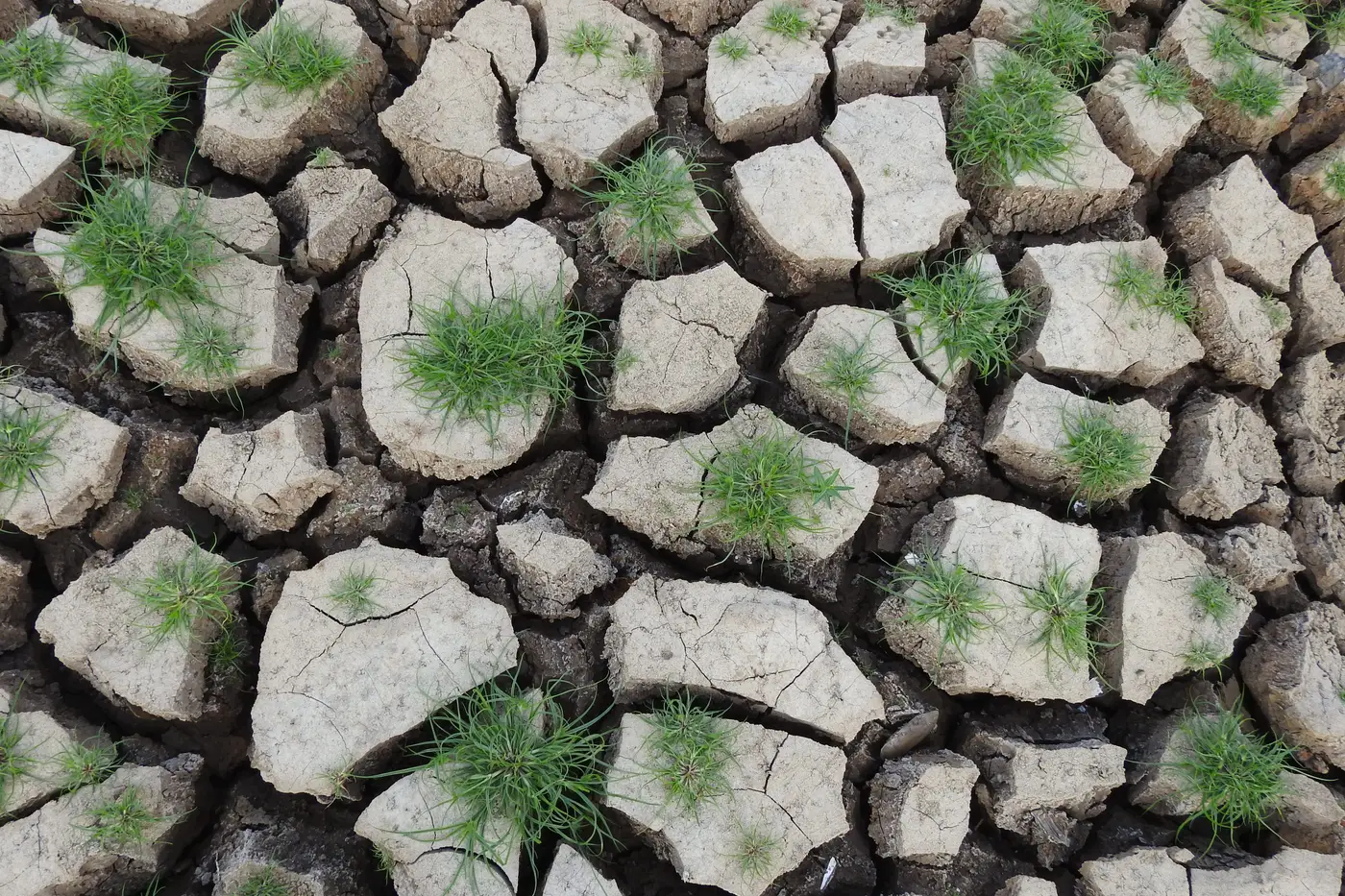
I walked a regraded waste rock pile in late May, about nine months after the drill seeder went over it the previous September. The seed mix was good. The tackifier held. The erosion blanket was doing its job on the steeper cut. And if you'd asked me to describe what I saw in terms a satellite could register, I'd have said: almost nothing yet.
That's the part nobody warns you about when they hand you a closure plan with a five-year revegetation milestone attached to it. The drill seeder goes in. Everyone exhales. And then there's a stretch, sometimes a full year, where the ground looks like it's doing something and the imagery doesn't agree, because it isn't wrong.
The plants are below the resolution of "vegetation" in any spectral sense. They're cotyledons. They're a scatter of grass blades two inches tall, spaced the way a drill seeder spaces them, with a lot of bare soil in between each row. A wide-swath multispectral pass at 10 to 30 meters per pixel is going to average that row structure with the dirt around it and hand you back a number that looks a lot like last year's number, before any seed went down.
I've had operators point to that first-season flatline like it's bad news, and I've had regulators point to it like it's evidence of a failed seeding. It's neither. It's the lag. First-year revegetation on a mine closure site is root establishment, not canopy. Cool-season grasses are putting carbohydrate into crown and root before they put it into leaf area you'd notice from the ground, let alone from 700 kilometers up. Shrub seedlings, if they're in the mix, are doing even less visible work in year one.
What matters for a bond decision is the trend across several seasons. A single annual read in that first year mainly sets the baseline you'll measure everything else against.
This is why an annual cadence makes more sense here than it would on a cropland contract, where you want to catch a canopy problem inside one growing season. A mine closure parcel is tracked against a different question: is it tracking toward the milestone in the closure plan, year over year, for as long as the bond is on the hook. One pass a year, taken at a consistent point in the growing season, gives you a record that's comparable across years without chasing week-to-week noise from a dry spell or a late frost that has little bearing on the seeding's long-run success.
What I'd tell anyone reviewing a first-year report: don't expect the index to move much, and don't let an operator oversell it if it does. In year one, the signal you're seeing is usually soil moisture and residual disturbance patterns, read through as if it were vegetation. The more honest read is to log the baseline, note germination counts from the ground survey if you have one, and wait for the second and third annual passes to show the real trajectory. That's when you start seeing the index separate itself from bare ground, and that's when a self-reported progress narrative from the site operator either holds up against the record or it doesn't.
A per-parcel index record that starts at seeding and keeps the same read, same time of year, every year after, is what turns "the operator says it's revegetating" into something a surety can actually hold a bond decision against. That's the record Revegetation Monitor builds off the wide-swath annual pass, parcel by parcel, against the closure plan's own milestones.
If your next bond review is riding on a flat first-year report, that's exactly the stretch Revegetation Monitor is built to read correctly.