Line-point intercept vs quadrat sampling for revegetation cover checks
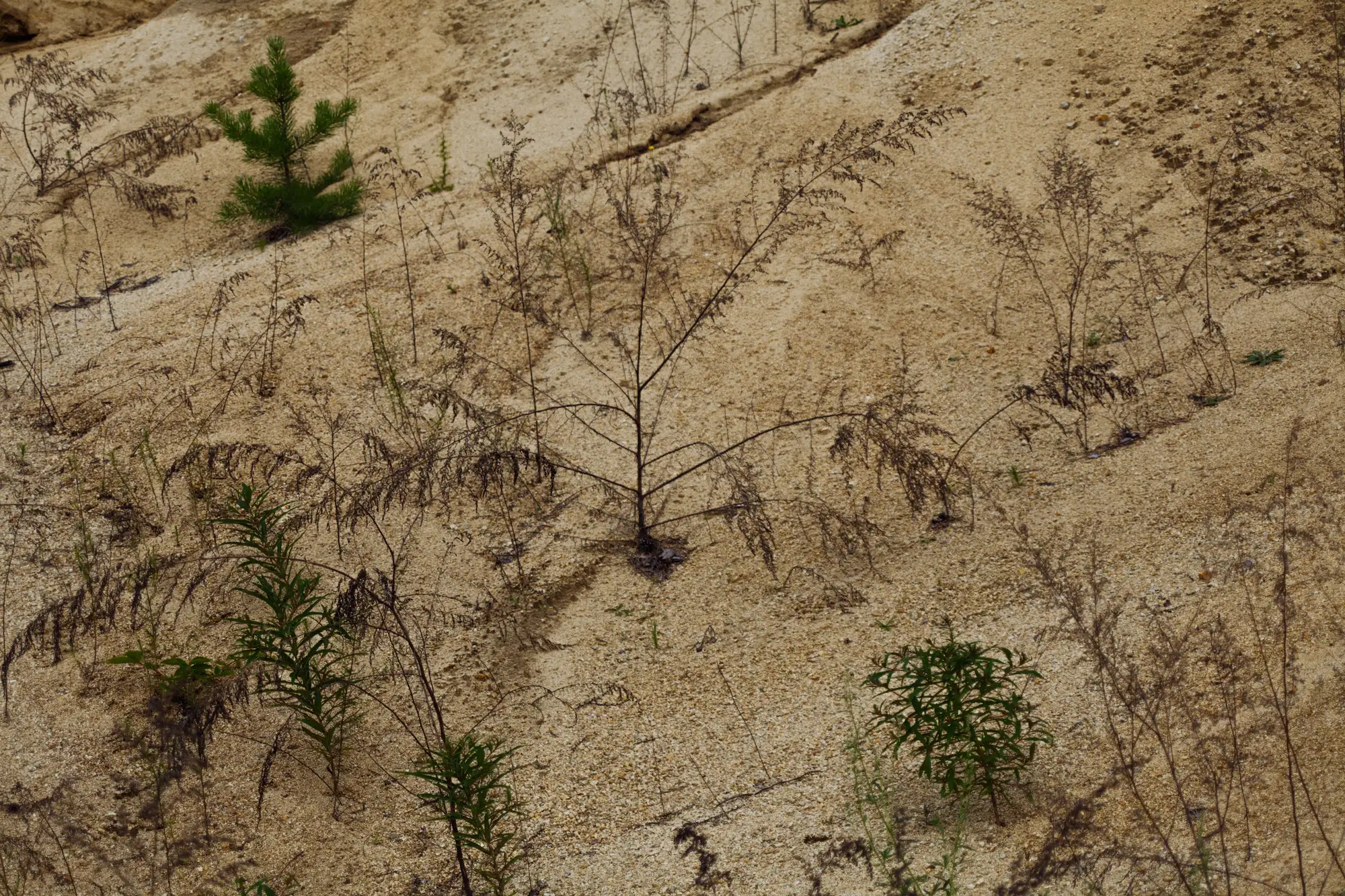
A compliance report lands on your desk with a percent-cover number for a reclaimed parcel. Somewhere behind that number is a field crew, a sampling method, and a season's worth of decisions about where to put a transect or a frame. Before you weigh that number against the closure plan's milestone, it helps to know which method produced it and what that method is actually good at.
What each method measures, and how
Line-point intercept works off a fixed transect. A crew stretches a tape, drops a pin (or sights down a pin frame) at set intervals, and records the first thing the pin hits: a leaf, litter, bare soil, rock. Do that at enough points along enough transects and the hit tally converts straight into percent cover, broken out by functional group if the crew is recording species. It's mechanical. Two trained technicians running the same transect on the same day should land close to the same number, because there's not much room for judgment call.
Quadrat sampling works differently. A frame, usually a meter square, gets placed at set points or along a transect, and the crew estimates cover inside that frame, either by eye or by counting a grid of sub-points within it. It's faster per plot than walking out a full transect and dropping pins one at a time, and it handles patchy, clumpy vegetation reasonably well because you're looking at an area instead of a line.
The tradeoff shows up at the low end, and the low end is exactly where most closure plans live in the early years. Ocular cover estimates inside a quadrat are easy to eyeball at 60% cover and much harder to pin down at 8%, which is the range where bond-release thresholds usually sit for a parcel that's two or three growing seasons into revegetation. Observer-to-observer variance on cover estimates is a documented problem in range and reclamation literature, and it doesn't go away with experience alone. It goes away with a method that removes the estimate.
Which method the closure plan actually calls for
The right answer depends on your plan's metric. If the closure document specifies percent cover against a numeric threshold, line-point intercept gives you a defensible, hit-based figure that holds up if a bond release gets contested. If the plan is tracking species richness or density per unit area, a quadrat count or a different plot-based method does that job better than LPI ever will.
A regulator or underwriter reviewing the submission needs to ask three things: which method the site's monitoring protocol specifies, whether that protocol has stayed consistent year over year, and whether the crew running transects this year is the same outfit that ran them two years ago. Methods drift. Technicians change. A parcel sampled by three different crews over five years, each one nominally running "the same method," can still produce a cover trend that just tracks who was holding the clipboard, not what's growing in the ground.
The gap neither method closes
Both methods share a limit that matters more than the LPI-versus-quadrat question: they're point samples of a parcel, collected by whoever the operator hired, and reported by that same operator. There's no independent layer checking whether the transect was walked where the report says it was walked, or whether this year's crew eyeballed cover the same way last year's did. For a bond that might sit on the books for a decade, that's a lot of trust riding on paperwork you didn't generate.
An annual read of the whole parcel from multispectral imagery doesn't replace ground sampling, and it won't tell you species composition. What it does give you is a consistent, operator-independent vegetation-index record for the full parcel footprint, tracked against the same closure milestones year after year, which is the kind of second line of sight a bond decision like this usually needs before money moves.
If you're weighing a revegetation cover report against a closure milestone this season, it's worth seeing what that parcel's imagery record would look like sitting next to it.